Key Technical Indicators Guide: MA, RSI, Bollinger Bands
In cryptocurrency or stock trading, technical indicators are essential tools for analyzing price movements and timing trades.
The most widely used indicators are Moving Average (MA), Relative Strength Index (RSI), and Bollinger Bands.
Below, we explain each indicator's concept, practical use, and examples.
How to Set Up Indicators
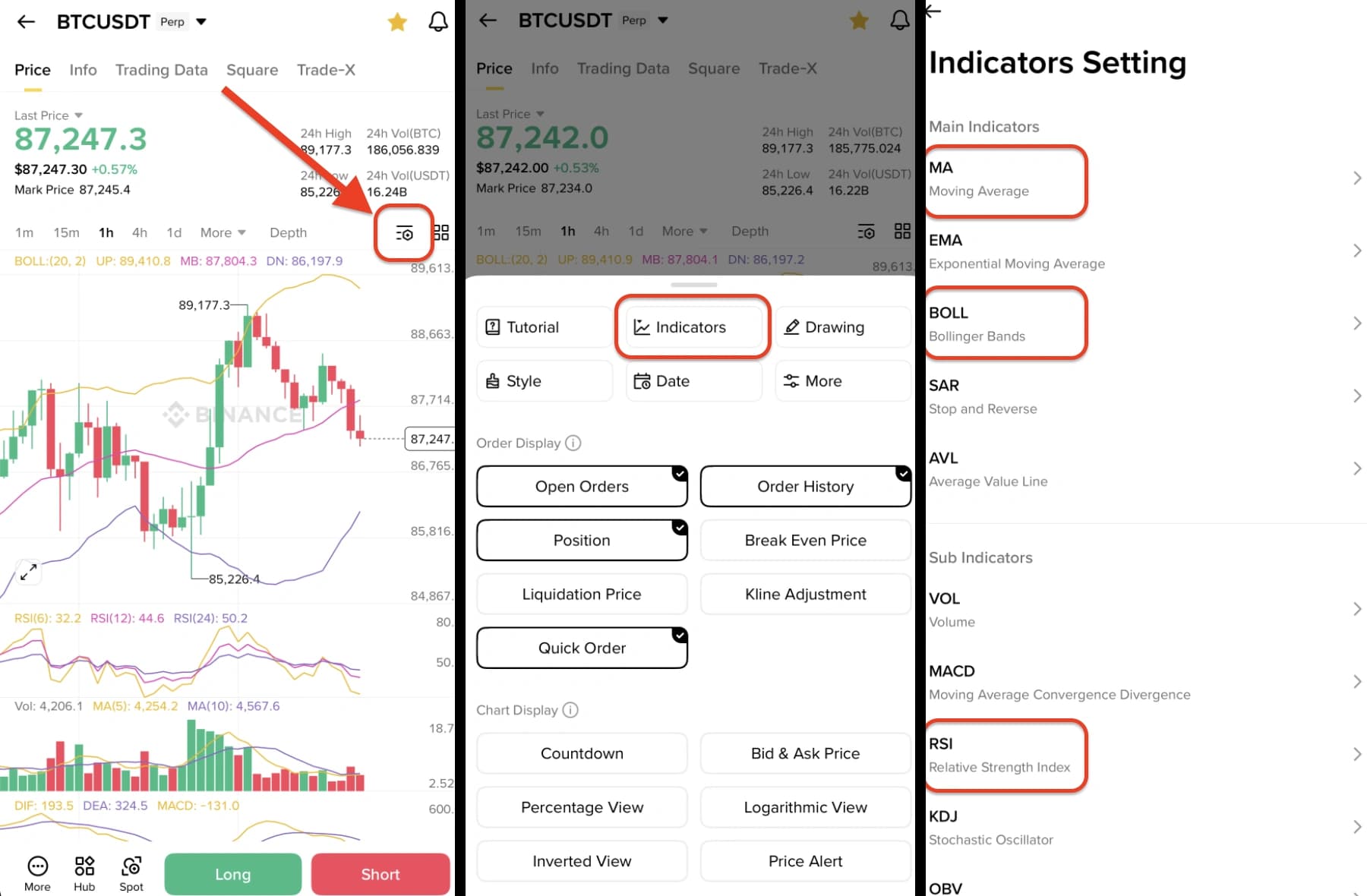
To use technical indicators on Binance, click on the "Indicators" button in the chart interface and select the indicators you want to add.
1. Moving Average (MA)
What the Numbers Mean
The number following MA indicates the period used to calculate the average (number of candles).
- •MA 7 → Average of the last 7 closing prices (short-term MA)
- •MA 25 → Average of the last 25 closing prices (medium-term MA)
- •MA 99 → Average of the last 99 closing prices (long-term MA)
Shorter periods react more sensitively to price changes, while longer periods show a smoother overall trend.
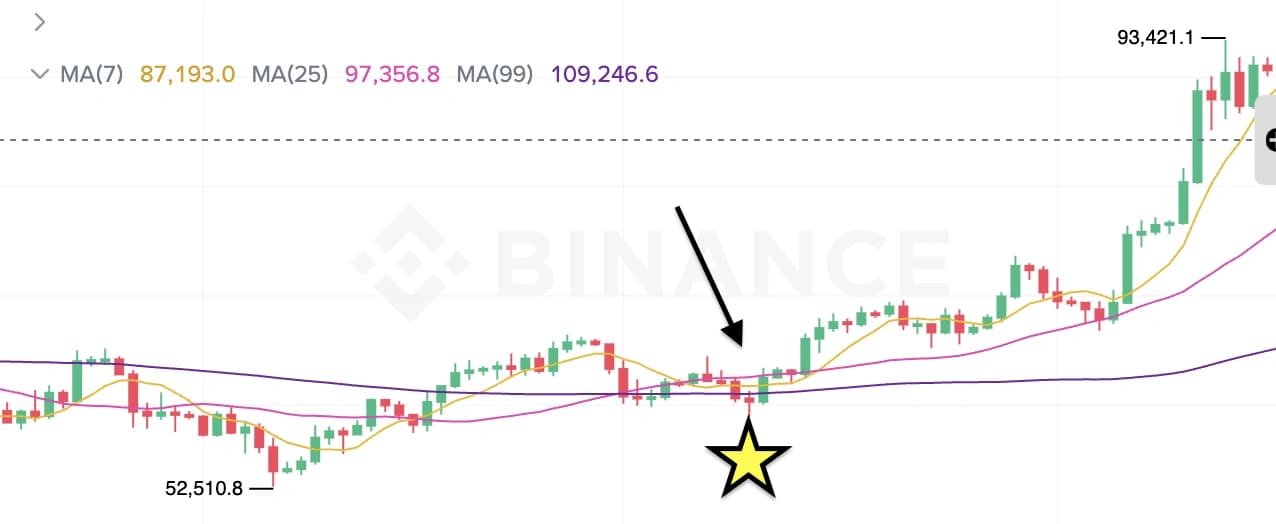
How to Use: Golden Cross and Dead Cross
When the short-term MA crosses the medium-term MA, it is a strong signal of potential trend reversal.
Golden Cross:
The short-term MA crosses above the medium-term MA → signals a potential uptrend → consider buying
Example: MA 7 crosses above MA 25 → short-term upward momentum increases → potential buy opportunity
Dead Cross:
The short-term MA crosses below the medium-term MA → signals a potential downtrend → consider selling or closing positions
Example: MA 7 crosses below MA 25 → selling pressure increases → consider short positions or closing long positions
2. Relative Strength Index (RSI)
RSI measures the relative strength of price movements on a scale of 0–100.
- •Above 70 → Overbought
- •Below 30 → Oversold
It helps identify areas where prices may have moved too far up or down.
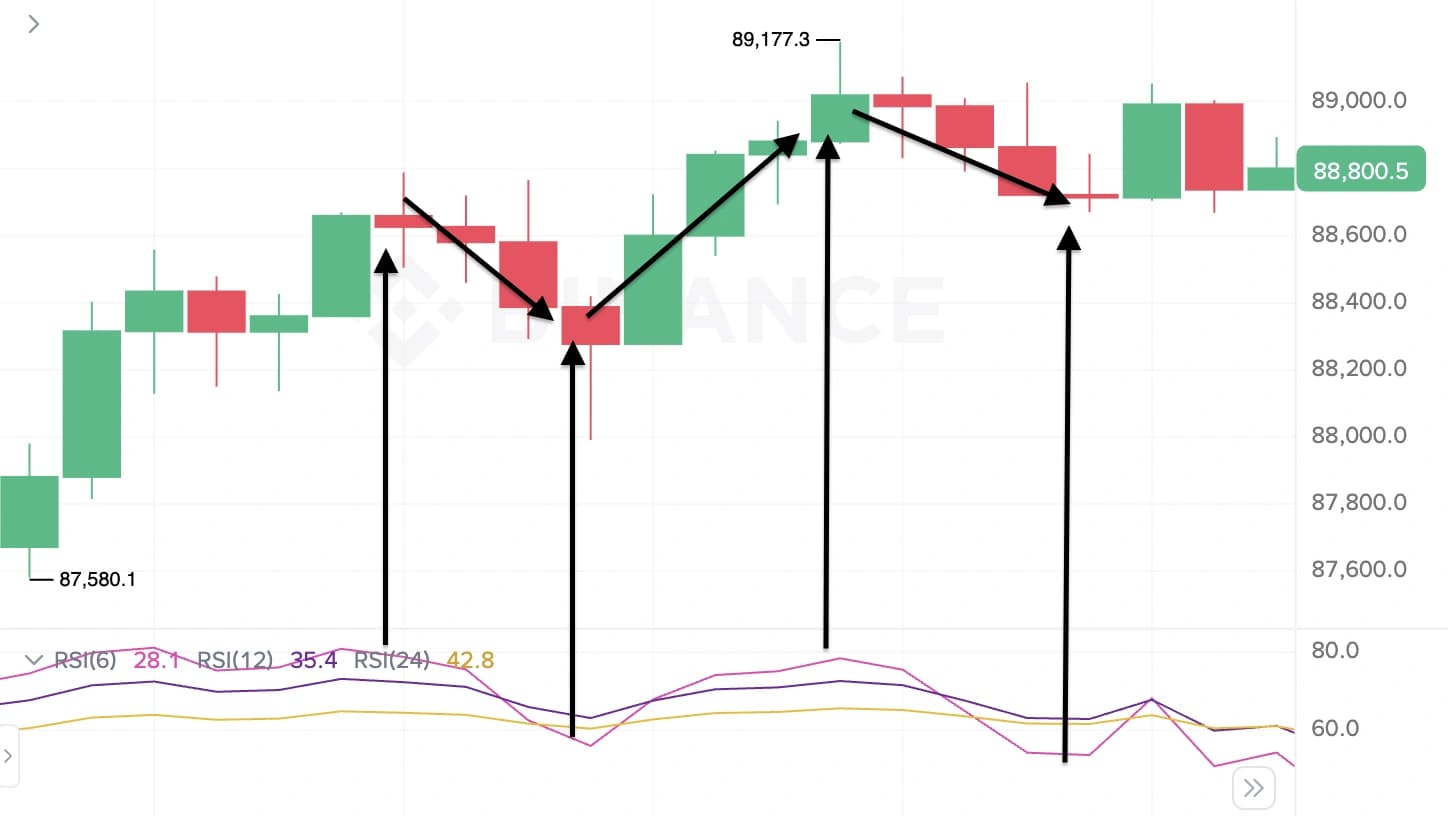
Example: RSI drops to 25 → indicates an oversold condition → potential rebound → consider buying
3. Bollinger Bands
Bollinger Bands visually show price volatility and consist of a moving average (middle line) and upper/lower bands.
- •Price near the upper band → overbought
- •Price near the lower band → oversold
Default Settings
- • Period: 20
- • Standard Deviation: 2
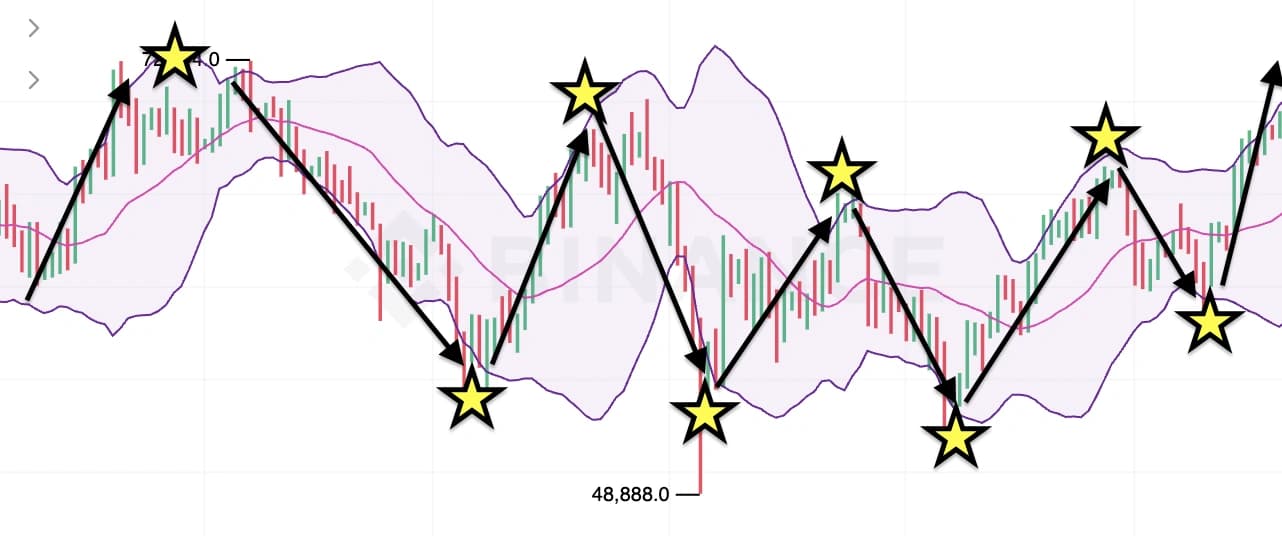
How to Use
- •Bounce from lower band → buy signal
- •Touching upper band → potential price correction
- •Band contraction → upcoming volatility expansion
- •Band expansion → trend continuation
Example: Price bounces from the lower band → buy entry → consider taking profit near the upper band
Summary
| Indicator | Key Use |
|---|---|
| MA | Golden Cross / Dead Cross → Trend reversal signals |
| RSI | Identify overbought / oversold conditions → anticipate price reversal |
| Bollinger Bands | Observe volatility and extreme price levels → timing trades |
Using these three indicators together enhances accuracy for trend analysis, entry, and exit timing, making trading decisions much more reliable than using a single indicator alone.